
 EN



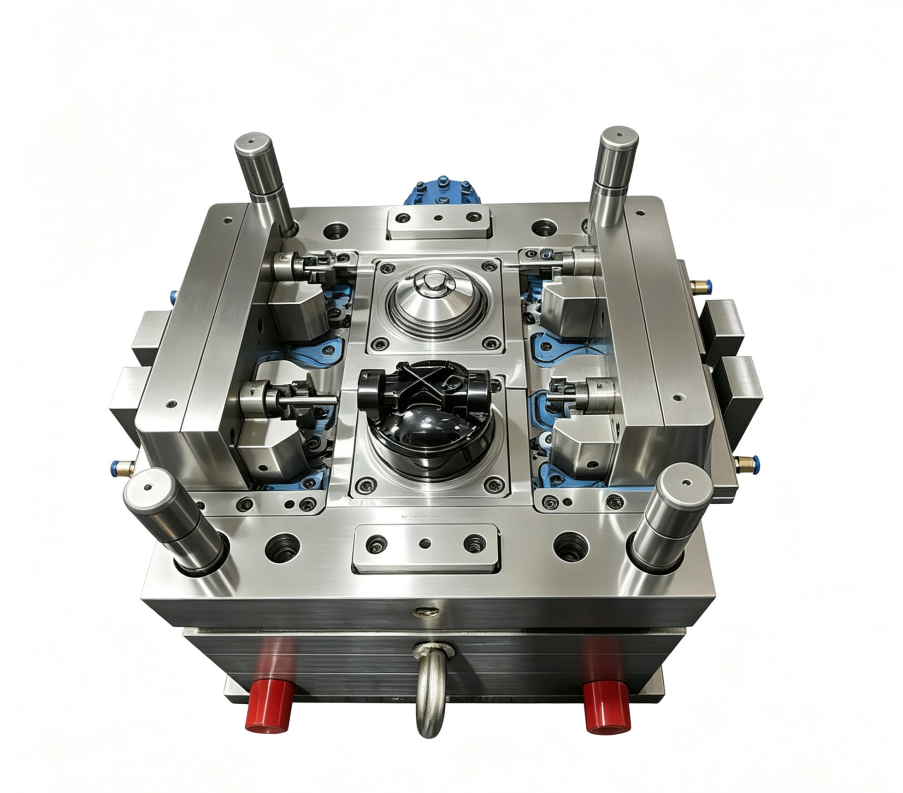
The precision mould manufacturing process represents one of the most critical disciplines in modern industrial production. Whether creating components for automotive, electronics, medical devices, or consumer products, understanding how a precision mould moves from concept to finished tooling is essential for manufacturers seeking competitive advantage and consistent quality output. The journey from initial design specifications to a fully functional mould involves multiple technical stages, each requiring expert attention to detail and adherence to strict tolerances.

Modern precision mould manufacturing integrates advanced computer-aided design, high-speed CNC machining, and rigorous quality verification protocols. This structured approach ensures that each mould meets dimensional accuracy, surface finish requirements, and performance benchmarks established during the planning phase. The entire manufacturing workflow balances speed with quality, cost efficiency with reliability, and innovation with proven best practices that have evolved across decades of tooling expertise.
Design and Engineering Phase
Initial Specification and CAD Development
The precision mould manufacturing process begins with comprehensive design work that translates customer requirements into detailed technical specifications. Engineers analyze the intended part geometry, material composition, production volume, and performance criteria to establish mould architecture and structural parameters. Using advanced CAD software, designers create 3D models that account for parting lines, cooling channels, gating systems, and ejection mechanisms necessary for successful production.
During this phase, engineers conduct simulation studies to predict material flow, cooling behavior, and potential defect formation during injection or casting operations. These simulations identify design modifications needed before physical mould manufacturing begins, significantly reducing the risk of costly revisions during tool production. The CAD data serves as the blueprint for all subsequent precision mould manufacturing steps, making accuracy and completeness essential at this foundational stage.
Material Selection and Core Planning
Selecting appropriate tooling materials forms a critical decision point in the precision mould manufacturing workflow. Engineers evaluate hardness, thermal conductivity, machinability, and corrosion resistance characteristics to match mould demands with material performance. Common choices include tool steel, stainless steel, and aluminum alloys, each offering distinct advantages depending on production volume, cycle time requirements, and surface finish specifications needed for the final part.
The precision mould design must also incorporate core and cavity arrangements that optimize cooling efficiency and minimize cycle time. Engineers plan cooling channel layouts, sized to maintain consistent temperature zones throughout the mould cavity. This thermal planning directly influences production speed and part quality, making it inseparable from the overall precision mould manufacturing strategy.
Machining and Fabrication Operations
CNC Machining and Tool Pathways
Once design data is finalized, precision mould manufacturing transitions to the machining stage, where CNC equipment transforms raw material into cavity geometry and structural features. High-speed CNC centers execute programmed tool paths derived from CAD models, cutting cavity profiles, cooling passages, and mounting surfaces with accuracy tolerances typically measured in microns. The precision mould manufacturing team carefully monitors cutting parameters, tool wear, and surface finish quality throughout this extended operation.
Modern precision mould manufacturing employs multi-axis CNC machines capable of simultaneous tool movements in five or six axes, enabling complex cavity geometry and reducing setup time between operations. Carbide cutting tools and specialized coolants optimize material removal rates while protecting tool edges from thermal stress and premature wear. Precision mould manufacturers must continuously balance speed with dimensional accuracy, as even minor deviations compromise final part quality and production efficiency.
Finishing and Surface Treatment Processes
After primary machining, precision mould manufacturing includes specialized finishing operations that refine surface texture and dimensional accuracy. Hand finishing, polishing, and honing work removes tool marks and reduces surface roughness to meet specification requirements. Depending on application demands, precision mould surfaces may receive electrical discharge machining (EDM) for intricate details, spark erosion for achieving sharp edges, or diamond polishing for enhanced light reflection and aesthetic qualities.
Surface treatment applied during precision mould manufacturing extends tool life and improves performance characteristics. Nitriding, PVD coating, and hard chrome plating create wear-resistant surfaces that withstand repeated cycles of molten material contact or high-pressure injection. These treatments are carefully selected based on the specific demands of production environments, ensuring that precision mould investment delivers years of reliable service and consistent part output.
Assembly, Testing, and Quality Verification
Component Integration and Final Assembly
The precision mould manufacturing process requires integrating multiple machined components into a unified tooling system. Core inserts, cavity plates, cooling manifolds, and ejection systems are precisely fitted together, with tight tolerance control ensuring proper functionality and part repeatability. Assembly operations follow strict procedural sequences to prevent damage to finished surfaces and maintain critical alignment specifications that precision mould performance depends upon.
Water lines and cooling circuits are carefully installed and tested to verify flow rates and temperature distribution patterns throughout the precision mould cavities. Ejection pins, slides, and actuating mechanisms are calibrated to operate smoothly without binding or uneven force distribution. Each assembly checkpoint in the precision mould manufacturing workflow includes dimensional verification using precision measuring instruments, confirming that tolerance stack-up remains within acceptable limits.
Trial Runs and Quality Validation
Before releasing a precision mould for production, manufacturers conduct trial injection or casting runs to validate performance under actual operating conditions. Initial parts are inspected dimensionally and visually to confirm cavity geometry, surface finish, and material distribution meet customer specifications. This trial phase allows precision mould manufacturers to identify cooling inefficiencies, gate positioning issues, or material flow problems that simulations may not fully predict.
Data from trial runs inform fine-tuning decisions, which may include cooling channel modifications, gate location adjustments, or cavity dimension refinements. Once performance metrics align with acceptance criteria, the precision mould is officially approved for production. Comprehensive documentation and photographs are maintained throughout the precision mould manufacturing process, creating records that support troubleshooting and future maintenance requirements throughout the tool's operational lifetime.
FAQ
What tolerances should precision mould manufacturing maintain?
Precision mould manufacturing typically maintains tolerances between plus or minus 0.002 to 0.005 inches, depending on part requirements and application complexity. Tight tolerances ensure dimensional consistency across production runs and reduce scrap rates caused by out-of-specification parts. The specific tolerance stack-up is established during the design phase and verified throughout every precision mould manufacturing stage.
How long does precision mould manufacturing typically require?
Precision mould manufacturing timelines range from four weeks for simple designs to twelve weeks or longer for complex, multi-cavity tooling. Lead times depend on mould complexity, material selection, required surface treatments, and manufacturer capacity. High-speed CNC machining and efficient planning can accelerate precision mould manufacturing schedules, though rushing increases risk of errors that prove costly during production runs.
What maintenance does a precision mould require after manufacturing?
Post-manufacturing precision mould care includes regular cleaning to remove material residue, periodic inspection of wear surfaces, and scheduled replacement of components showing degradation. Cooling systems require periodic flushing to maintain thermal efficiency, and ejection mechanisms benefit from lubrication protocols. Proper maintenance extends precision mould lifespan and preserves dimensional accuracy, maximizing return on the significant investment precision mould manufacturing represents.